
TRIREM
- Presentation
- History
- Activities
- Know-how
- Perspectives
- Members
Near-Infrared detector characterization platform
TRIREM is a characterization platform dedicated to infrared detectors used in scientific instrumentation projects. Building on developments carried out at IP2I for the Euclid space mission, it provides a cryogenic infrastructure that enables the performance of array detectors to be qualified under conditions representative of their operational environment.
The platform brings together IP2I’s expertise in instrumentation, cryogenics, optics, low-noise electronics, and data acquisition and analysis to support research and development activities focused on near-infrared detection.
From Euclid developments to TRIREM platform
The origins of TRIREM can be traced back to the instrumental developments carried out at IP2I as part of the European Space Agency’s (ESA) Euclid mission. This mission aims to study the dark universe by observing several billion galaxies using two onboard instruments, including NISP (Near Infrared Spectrometer and Photometer), which is dedicated to near-infrared observations.
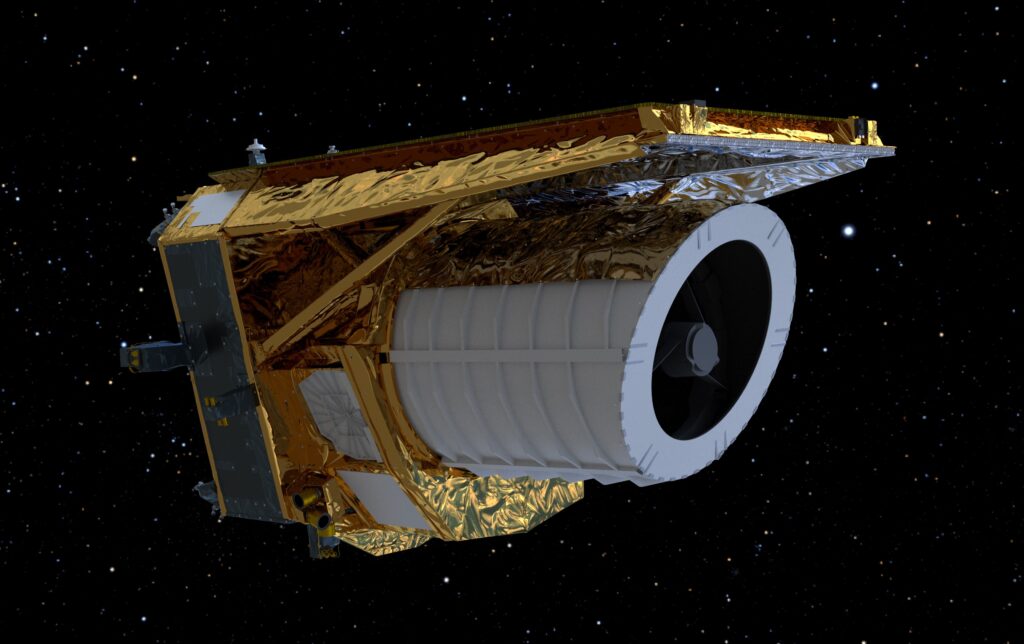
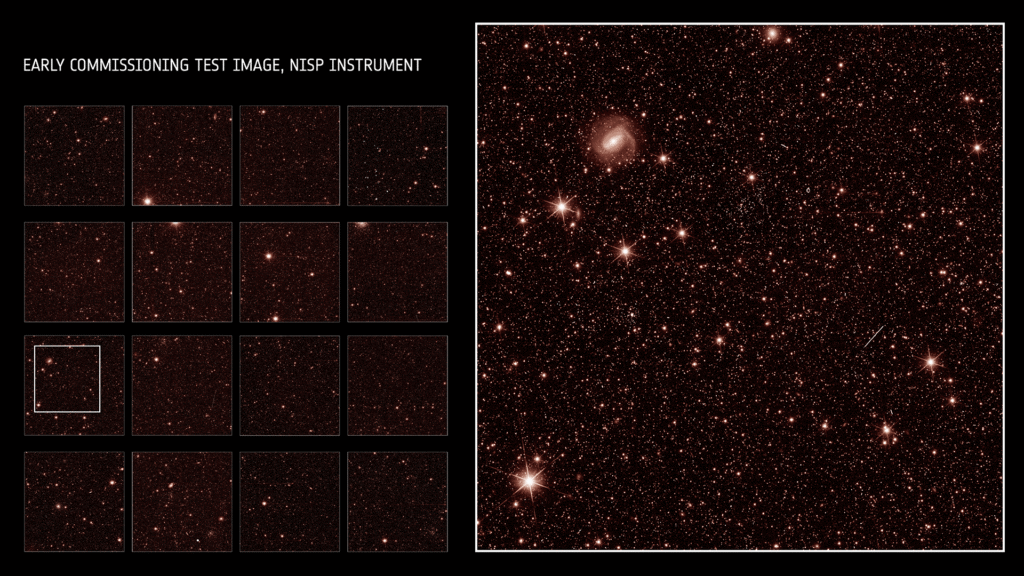
Euclid space telescope Early commissioning test image NISP instrument
To meet the qualification requirements for the H2RG detectors on board NISP, IP2I designed, developed, and operated a cryogenic characterization bench capable of replicating the space instrument’s operating conditions.
This test bench was used throughout the mission’s development phases to validate the acquisition system, characterize the sixteen flight detectors, prepare tuning procedures for the flight models, and validate calibration scripts and quality control procedures. These developments were carried out in close collaboration with several international partners, notably the European Space Agency (ESA), the NASA Goddard Space Flight Center (GSFC) and Markury Scientific.
Today, this expertise and infrastructure form the foundation of the TRIREM platform, which aims to extend these characterization capabilities to new scientific and instrumental projects.
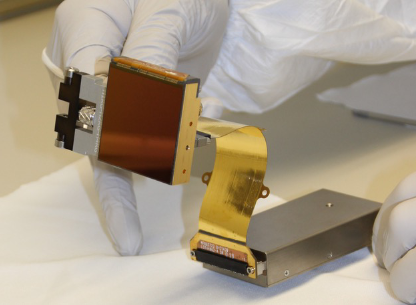
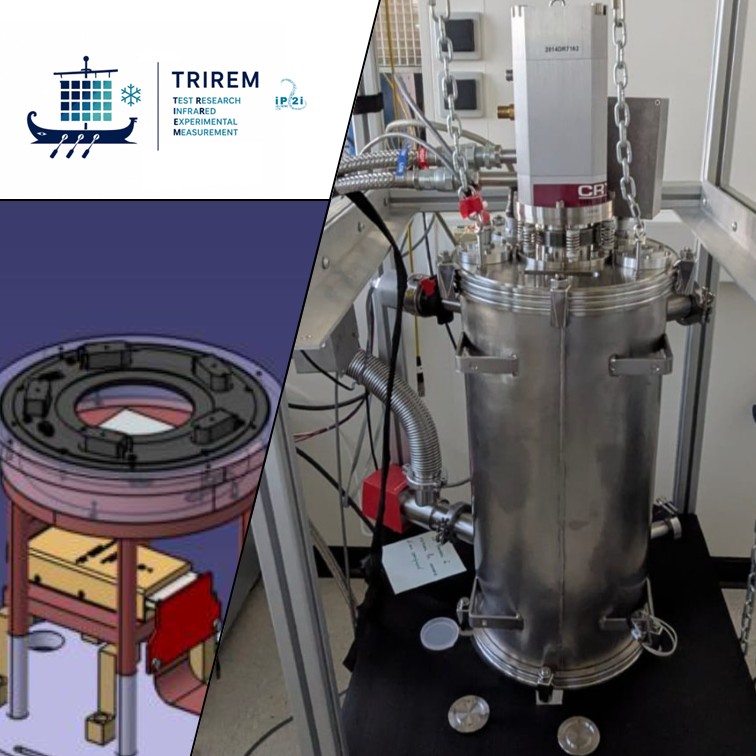
SCS with an H2RG sensor
A platform dedicated to the characterization of infrared detectors
TRIREM develops and implements experimental tools designed to study the performance of near-infrared detectors.
The platform enables the evaluation of detector behavior in a controlled cryogenic environment, where thermal contributions are significantly reduced in order to assess the intrinsic performance of the components.
Characterizing an infrared detector requires the study of several instrumental properties, such as readout noise, dark current, nonlinearity, and persistence effects. Each property is the subject of a specific measurement campaign, followed by a detailed analysis of the acquired data and the production of a characterization report summarizing the experimental results obtained under controlled conditions.
Characterization campaigns focus in particular on:
- dark current;
- readout noise;
- the thermal stability of the detectors;
- persistence and nonlinearity effects;
- the development and validation of calibration and quality control procedures.
The acquired data help improve our understanding of instrumental performance and enable the development of the analytical methods needed for future generations of scientific instruments.
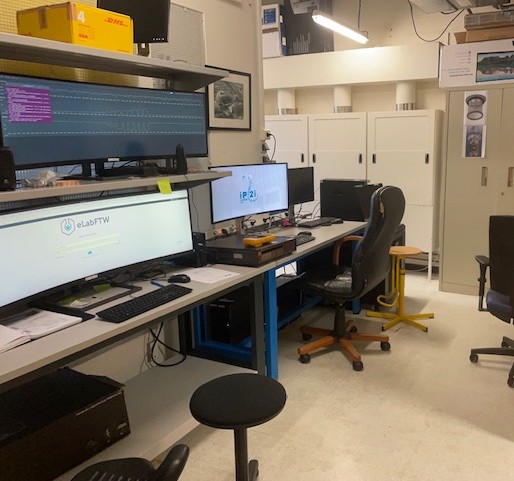
TRIREM experimental lab
Data acquisition and automation system
For each property under study, the scientist defines a data acquisition scenario describing the sequence of measurements to be performed as well as the configuration of the associated instruments. In the context of infrared detector characterization campaigns, these scenarios can last several hours, making the complete automation of experimental sequences essential.
The DAS (Data Acquisition System), developed at IP2I, meets these requirements. It enables the automatic execution of complex acquisition scenarios for the characterization of infrared detectors, including instrument control, the sequencing of experimental steps, and data recording.
The system demonstrated its robustness during the TV1 phase of characterization of the sixteen flight detectors for the Euclid telescope’s NISP instrument, during which it ensured the automatic sequencing of scenarios for nearly three weeks of continuous 24-hour operation, with an efficiency rate of approximately 94% compared to a theoretical uninterrupted acquisition.
This automation ensures the reproducibility of measurements, optimizes the operational time of the experimental benches, and enables the conduct of long-duration characterization campaigns.
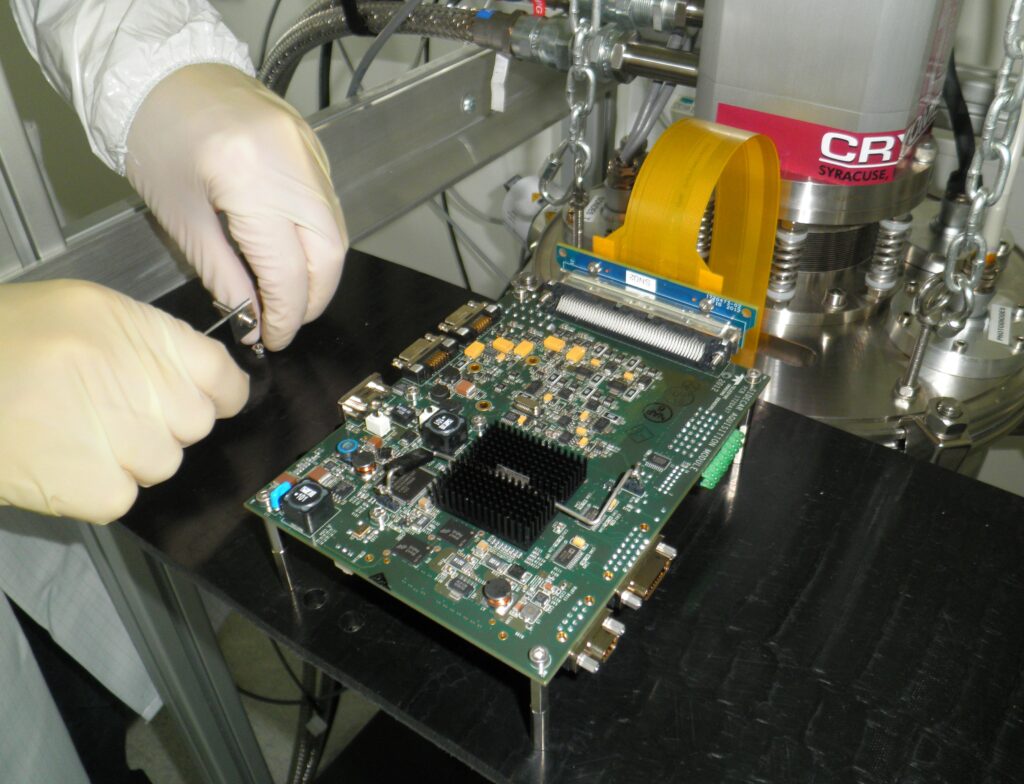
SAM board connected to the cryostat
Experimental methods
The core of the platform is a cryogenic bench designed to house infrared array detectors in a temperature-controlled vacuum environment.
The infrastructure includes, in particular:
- a pulsed-tube-cooled cryostat;
- high-stability temperature control;
- readout electronics dedicated to infrared detectors;
- illumination and shuttering systems for calibration campaigns;
- control, acquisition, and monitoring systems for the facility;
- a software suite dedicated to test control and data analysis.
This architecture enables dark-frame acquisitions, calibration sequences, and comprehensive characterization campaigns on scientific infrared detectors.
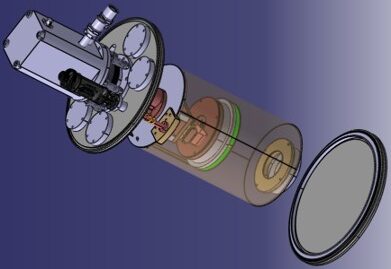
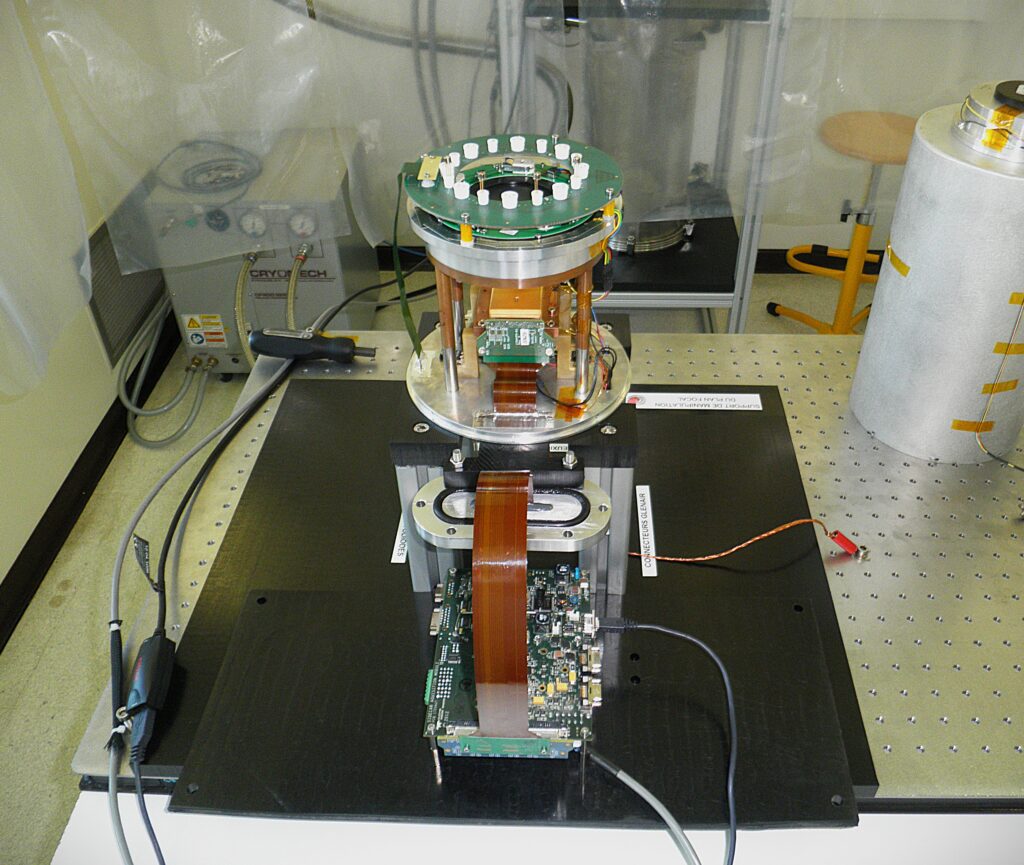
CATIA 3D model of the cryostat Cryostat structure connected to the SAM board
TRIREM provides research projects with expertise covering the entire instrumental characterization process:
- integration of infrared detectors;
- operation of cryogenic environments;
- optimization of optical and electronic performance;
- development of experimental protocols;
- data acquisition and processing;
- validation of calibration and quality control procedures.
The experience gained through the Euclid mission now serves as a technical foundation for supporting the development of new instruments and software that require precise characterization of infrared detectors.
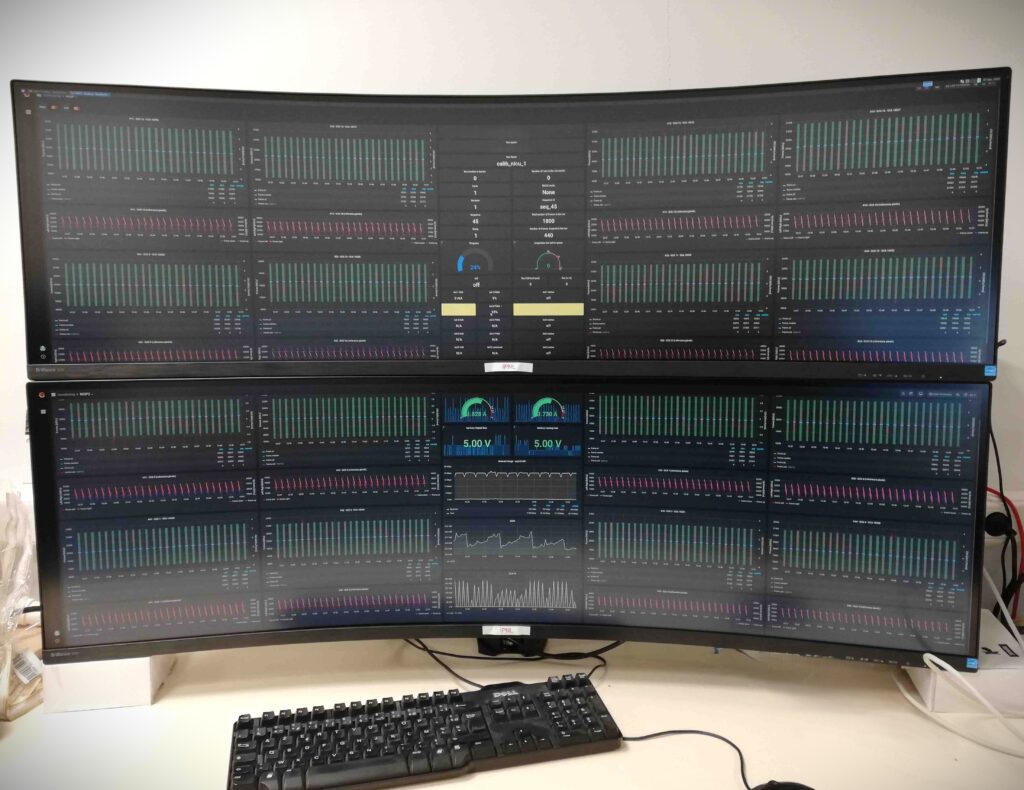
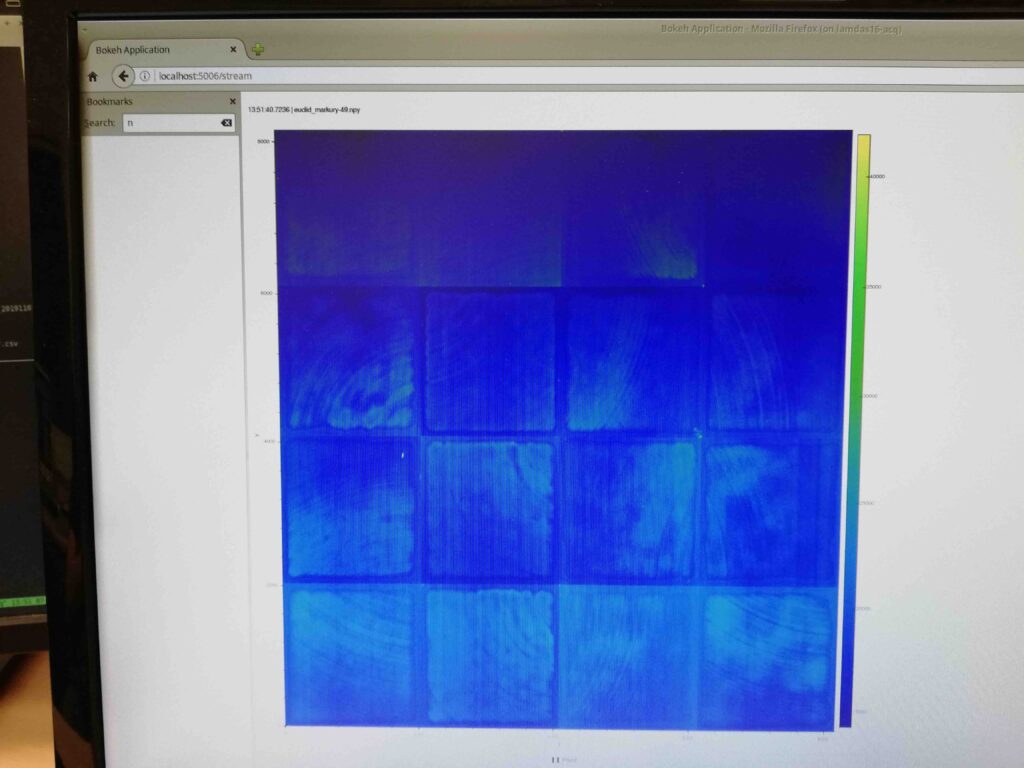
Real-time visualisation of data acquisition during the characterisation of the 16 H2RG flight detectors on the Euclid telescope’s NISP instrument
The TRIREM platform continues to build on the experimental capabilities developed at IP2I to meet the needs of future instrument development projects.
Beyond its Euclid legacy, it is intended to become a research support infrastructure for collaborations requiring infrared detector characterization campaigns, the development of new measurement methodologies, or the validation of data acquisition and processing chains.
Through this work, TRIREM contributes to the development of future generations of instruments for astrophysics, cosmology, and, more broadly, scientific applications requiring near-infrared measurements.
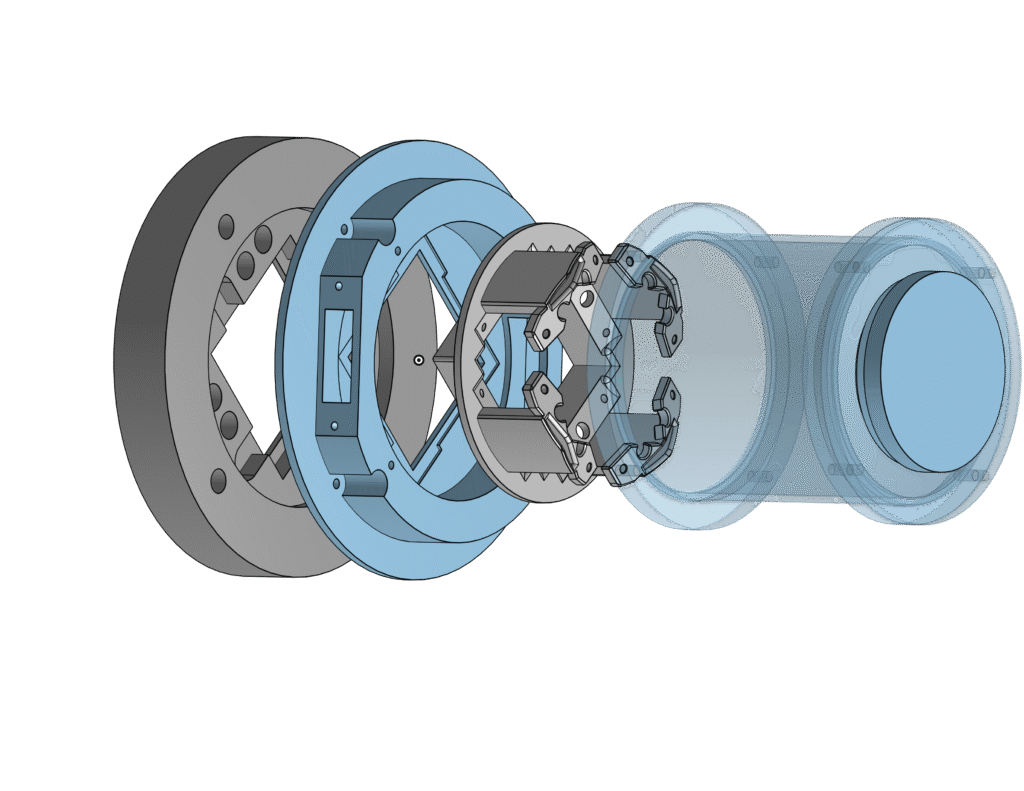
3D model of the test bench’s illumination structure
ABDOUL-CARIME Hassan
ALCOCER AVILA Mario
ALPHONSE Gersende
ARBEY Alexandre
ARMATOL Antoine
ARNAUD Nicolas
AUFRANC Cecile
AUGIER Corinne
AUTIERO Dario
BALLEYGUIER Loup
BARTHELEMY Eleonore
BAULIEU Guillaume
BECHETOILLE Edouard
BENDER Michael
BENECH Eric
BENNACEUR Karim
BENOIT Alain
BERERD Nicolas
BERTHET Frédéric
BEUVE Michaël
BILLARD Julien
BONNEVAUX Alain
BORJA Caroline
BOUDOUL Gaelle
BOUHELAL Malik
BUTHOD Anthony
CALABRIA Peter
CAPOANI Lionel
CAPONETTO Luigi
CARLUS Bruno
CAZES Antoine
CERUSE Philippe
CHAIZE David
CHANFRAY Guy
CHANON Nicolas
CHARLIEUX Florence
CHAUVET Clément
CHEN Xiushan
CHESHKOV Cvetan Valeriev
COLAS Jules
COMBARET Christophe
CONTARDO Didier
COPIN Yannick
COULON Matthieu
COURTOIS Helene
CUZON Stephane
DAHOUMANE Mokrane
DARME Luc
DAVESNE Dany
DAVID Quentin
DAVIDSON Sacha
DE JESUS Maryvonne
DEANDREA Aldo
DEGALLAIX Jerome
DELAUNAY Didier
DELLA NEGRA Rodolphe
DEPASSE Pierre
DOIZON Fabien
DUCIMETIERE David
DUCOIN Camille
DUDOUET Jérémie
DUPASQUIER Thierry
EALET Anne
EL MAMOUNI Houmani
EYNARD Alexis
FARIZON Bernadette
FARIZON Michel
FAY Jean
FERRIOL Sylvain
FILLOL Raphael
FLORES Sylvie
FONTAINE Christine
FOREST Daniele
GAILLARD Clotilde
GAILLARD Déborah
GALBIT Geoffrey
GALYMOV Vyacheslav
GARDE Gustave
GASCON Jules
GASCON Susan
GAVARINI Stéphane
GERMANI Lionel
GIERES François
GIRAUD Yoan
GONCALVES LARBI Sandra
GOUZEVITCH Maxime
GRANATA Massimo
GRENIER Gerald
GUERIN Cyrille
HAEGEL Leïla
HANSEN Hubert
HOFMAN David
HOHENEGGER Stefan
IANIGRO Jean Christophe
JACMART-GAMBUT Florence
JUILLARD Alexandre
KUBIK Bogna
LAGRANGE Bernard
LAKTINEH Imad
LALLE Philippe
LARAVINE Anthony
LARBI Mehdi
LARGER Frédéric
LETHUILLIER Morgan
LONG Kenneth
LOPEZ Jean Pierre
MAATALLAH Laïla
MAGNE Nicolas
MAHMOUDI Farvah
MALESYS Céline
MARCHISONE Massimiliano
MARTEAU Jacques
MARTINI Nicolas
MATHEZ Herve
MERENI Lorenzo
MEYER Jacques
MICHEL Christophe
MILLARD-PINARD Nathalie
MIRABITO Laurent
MONCOFFRE Nathalie
MOUNIER Franck
NODARI Benedetta
NOEL Guillaume
NORTIER Florian
NTAGANZWA Uwimana Jules
OUAZANI Youssouf
PANETIER Clémentine
PENNACCHIO AUTIERO Elisabetta
PERRIES Stéphane
PHILOUZE Pierre
PINARD Laurent
PIPON Yves
POLI PANTELIS Bruno
PUGNERE Denis
RAMASUBRAMANIAN Niveditha
REDON Nadine
RICHARD Jean-Marc
RIGAULT Mickaël
RIOU Laurent
RIVAL Pascal
RODRIGUEZ-LAFRASSE Claire
ROSSIN Christelle
RULLIERE Alain
RUPPIN Florian
RUSSO Patrice
SAHAN Birgül
SANGLARD Véronique
SASSOLAS Benoit
SAYAH Sihem
SCHIBLER Emilie
SCHIRRA Florent
SEON Damien
SEROUR Karim
SMADJA Gerard
SORDINI Viola
STEZOWSKI Olivier
TBATOU Saïd
TEILLON Julien
TESTA Etienne
TROMEUR William
TSIMPIS Dimitrios
URAS Antonio
VANDER DONCKT Muriel
VAROCLIER Virginie
VERDIER Patrice
VINCENEUX Romain
VIRET Sebastien
WOZNY Anne-Sophie
ZOCCARATO Yannick
NON-PERMANENTS:
- DOCTORANTS / DOCTORAL STUDENTS:
ALEZRAA Timothé
ALLAN Camille
AZAM Clémentine
BOUAFIF Chaima
CAPOLONGO Saverio
DELLA ROSA Maria Candela
DELLAZZERI Luna
DIDIER-ESTEVE Eva
DONAYAN Stanislas
EDDEHMANI Issam
FAURE Romain
FILLAUDEAU Enzo
GOLLER Philipp
GUILLON Valentin
JOUBERT Gaspard
KREMPP Théodrède
LATHUILIERE Brice
LAUTIER Remi
LE BELLEC Tatiana
LE JEAN Maxime
MALACHER Léa
MAUCERI Giorgio
MONATH Sebastian
POIDOMANI Daniele
SABARD Adrien
SALOME Madeline
SAMPIERI Tom
STRUBBIA MANGIARELLI Camila
THOMEER Matthieu
TISSOT Mathilde
TRIGUI Adam
VAGINAY William
VEROLLET Christian
XU Lang
ZIMMERMANN Léo
- CHERCHEURS NON-PERMANENTS / NON-PERMANENT RESEARCHERS: